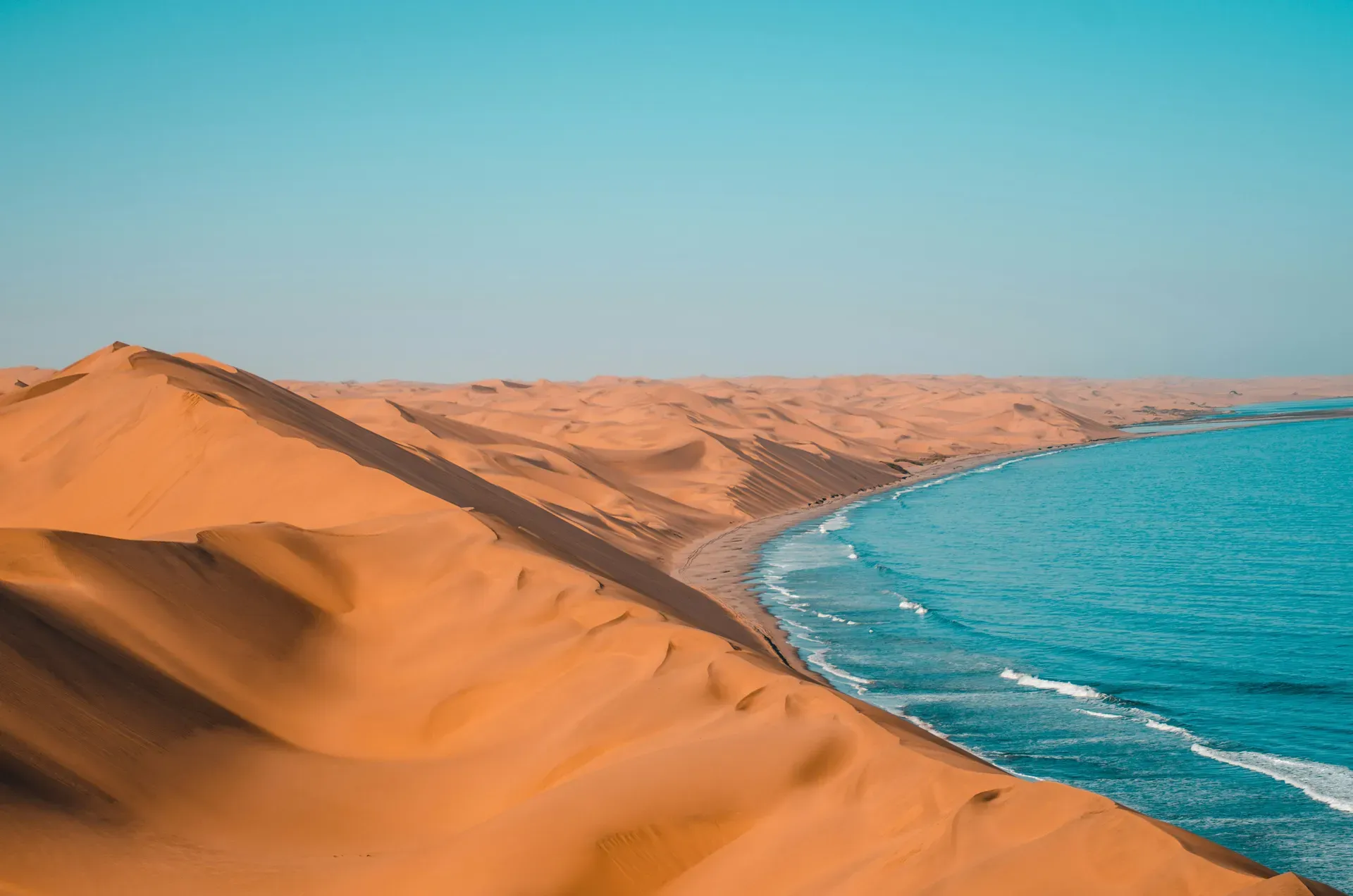
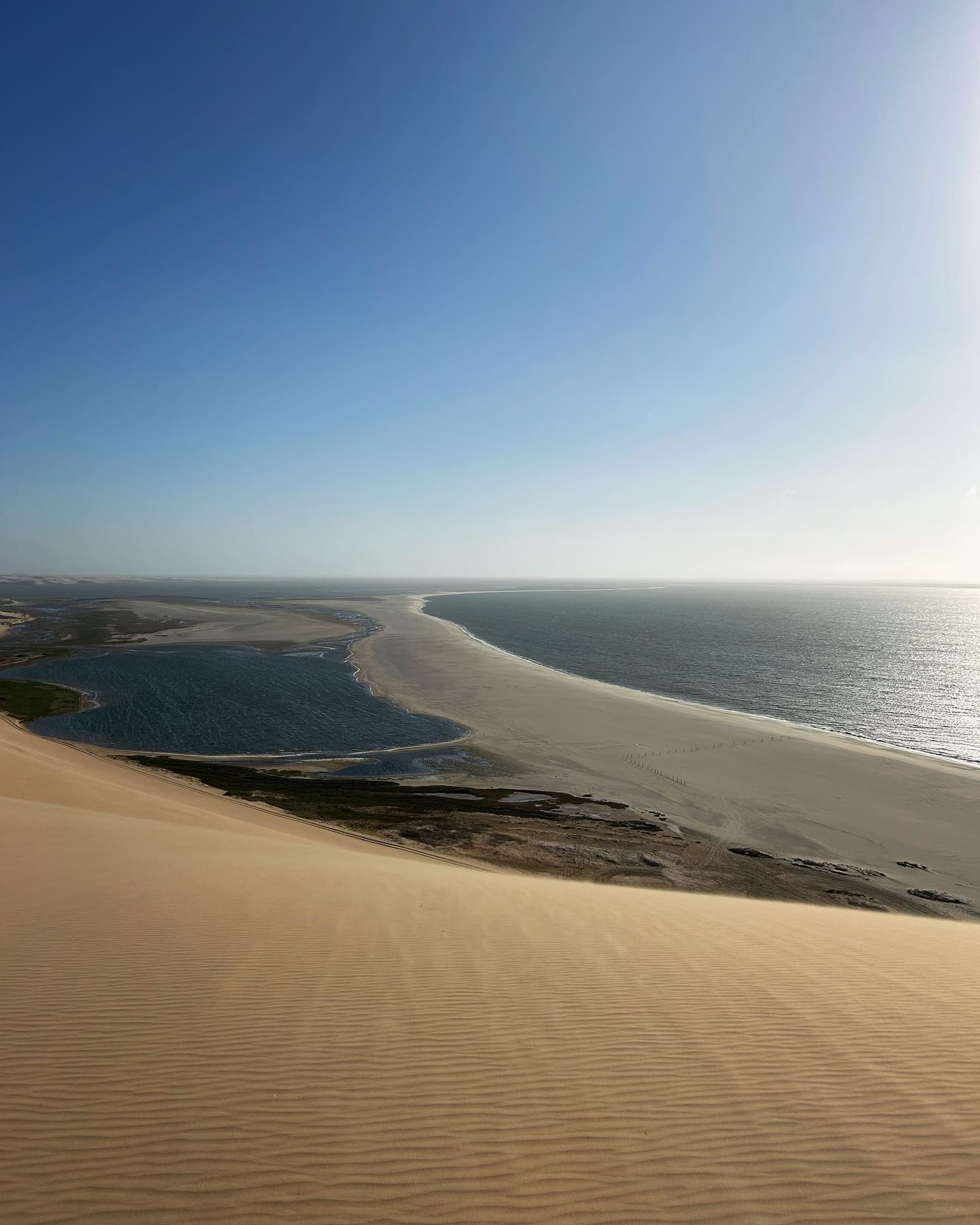
Located 80 kilometers south of Walvis Bay, Sandwich Harbour is a rare coastal ecosystem where sand dunes reaching over 100 meters high drop directly into the Atlantic Ocean. This protected Ramsar wetland features a 3.7-kilometer lagoon that supports thousands of migratory flamingos and pelicans, creating a stark contrast between raw desert and rich birdlife.
Find Guided ToursSandwich Harbour is a remote coastal wilderness located 80 kilometers south of Walvis Bay in Namibia's Erongo Region. Situated within the protected Namib-Naukluft National Park, the area is defined by a rare geographical phenomenon where towering golden sand dunes, reaching heights of over 100 meters, plunge directly into the crashing waves of the Atlantic Ocean. The landscape is divided into a northern bay measuring 4.2 kilometers long by 4 kilometers wide, and a shallow southern lagoon.
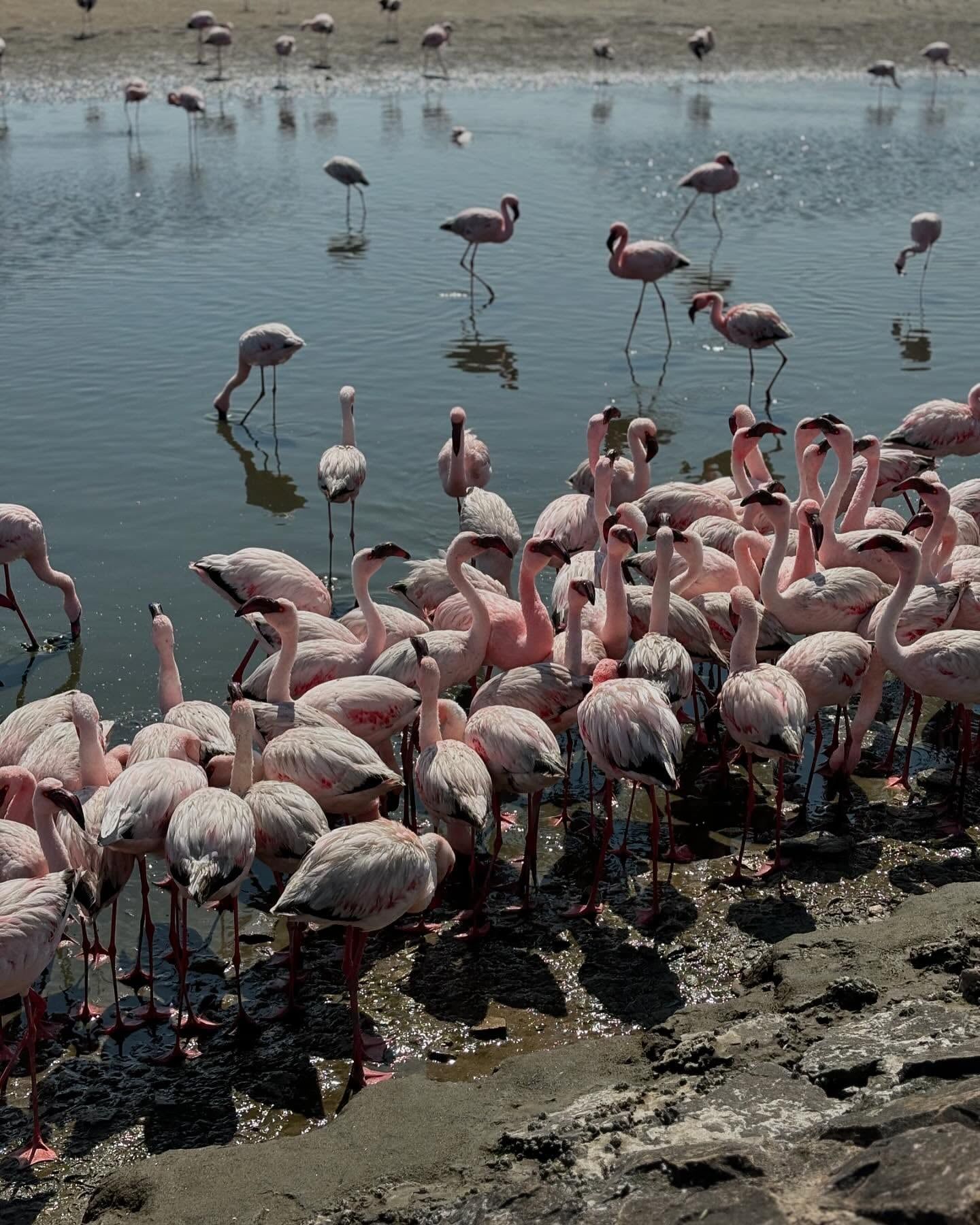
The southern lagoon spans 3.7 kilometers in length and 1 kilometer in width, separated from the bay by beach ridges and saltpans. Brackish water seeps beneath the desert sands into this lagoon, sustaining large reed beds and a rich coastal ecosystem. Because of its immense ecological value, the site received official designation as a Ramsar Wetland on August 23, 1995. It serves as a crucial sanctuary for thousands of migratory wetland birds, including large flocks of flamingos, pelicans, and Cape gulls.
Portuguese explorer Diogo Cão first recorded the area in 1486, naming it Port d’Ilheo. By the 19th century, the isolated bay had transformed into an active commercial port. It supported a variety of maritime and industrial activities, including whaling, fish processing, beef canning, and guano collecting. In 1884, the site gained strategic importance as a primary supply harbour for German South-West Africa.
The port's commercial utility was ultimately short-lived. Swakopmund eventually replaced it as the region's main harbour. Shortly after 1890, a protective sand spit broke, fundamentally altering the local geography. The breach caused the bay to become too shallow for large ships to navigate, forcing the complete abandonment of the port and requiring travelers to cross the harsh desert overland. Today, the area remains uninhabited by humans, preserved instead as a raw desert ecosystem.
Discover the full history and cultural significance on our About page.
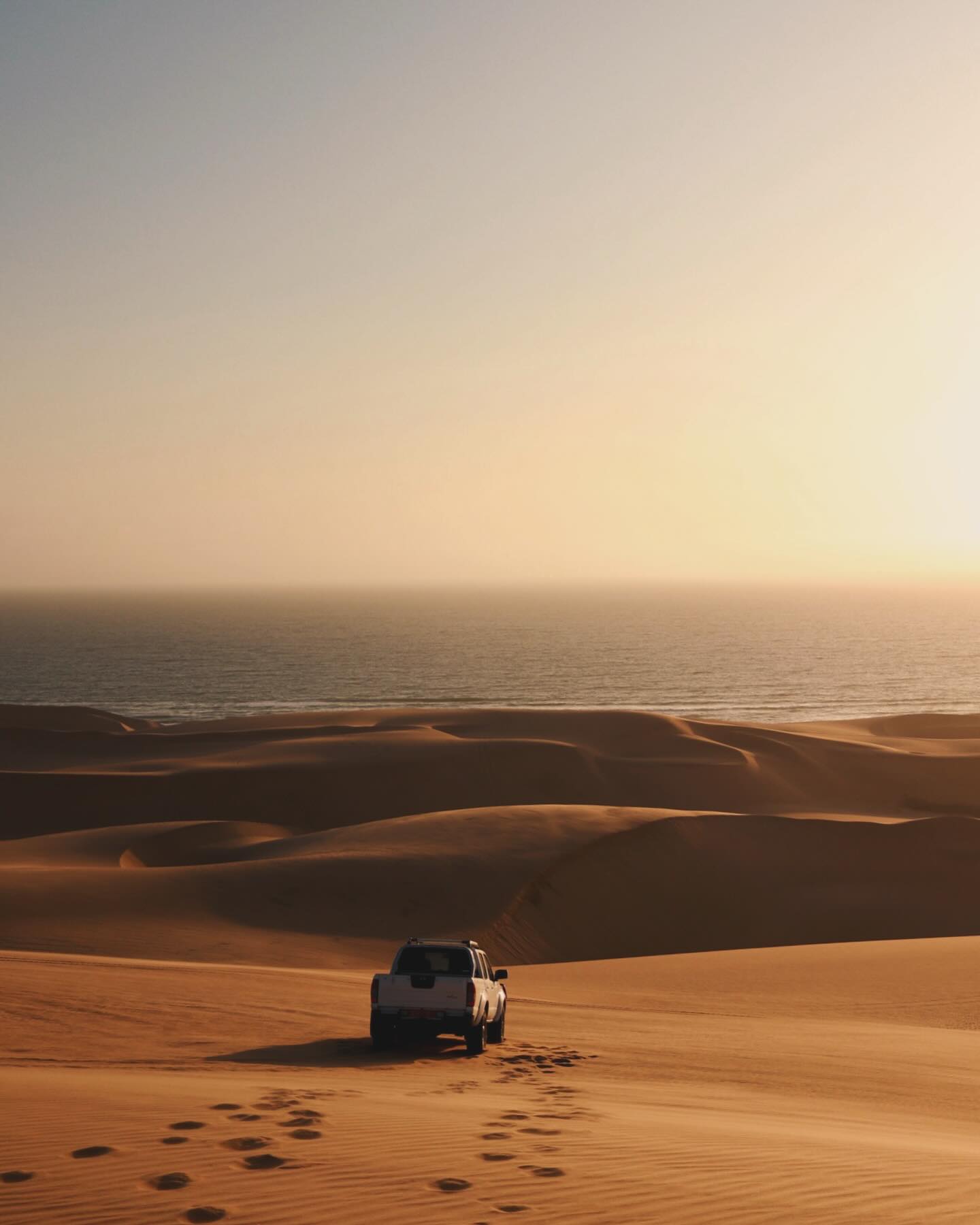
Expert drivers navigate 4x4 vehicles along steep 30-to-40-degree sand ridges. Passengers ascend massive golden crests reaching over 100 meters tall before sliding down slopes right beside the crashing Atlantic Ocean. This highly tide-dependent beach route provides raw, immediate access to the desolate edges of the Namib Desert.
A 3.7-kilometer-long brackish lagoon sits separated from the sea by narrow beach ridges. Officially designated as a Ramsar Wetland in 1995, this shallow water habitat supports large reed beds. The sanctuary attracts thousands of migratory birds, including dense flocks of pink flamingos, pelicans, and cape gulls.
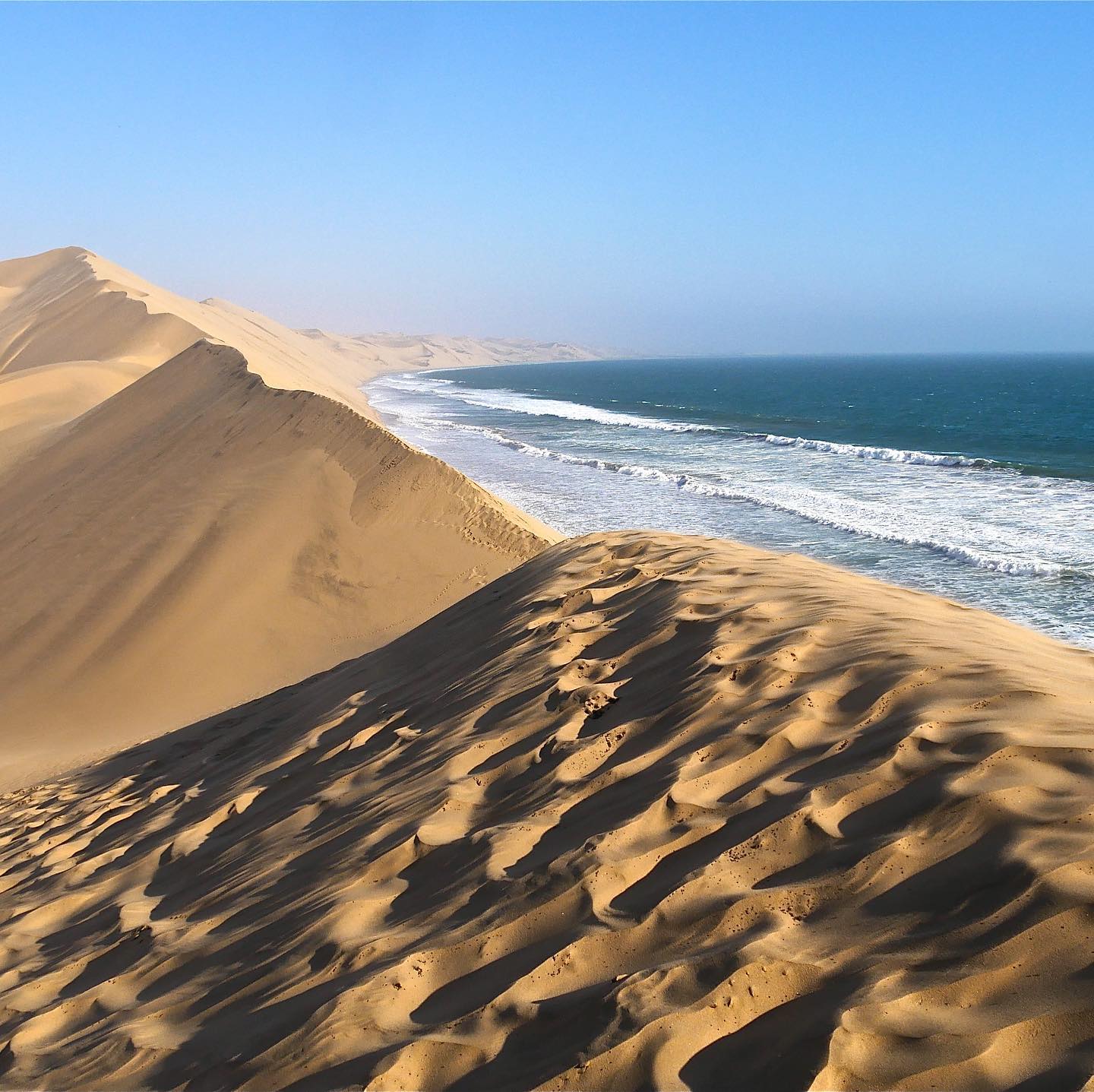
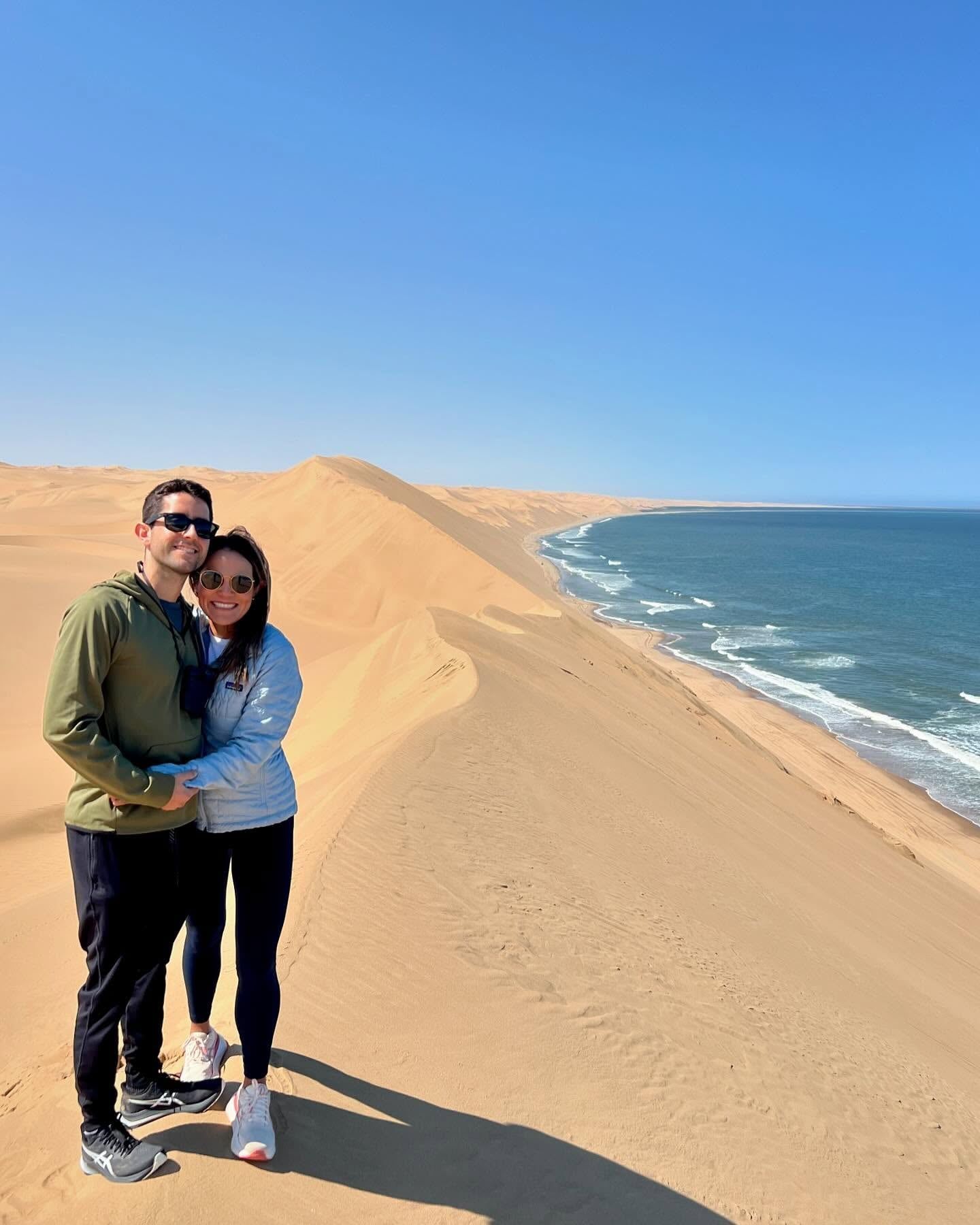
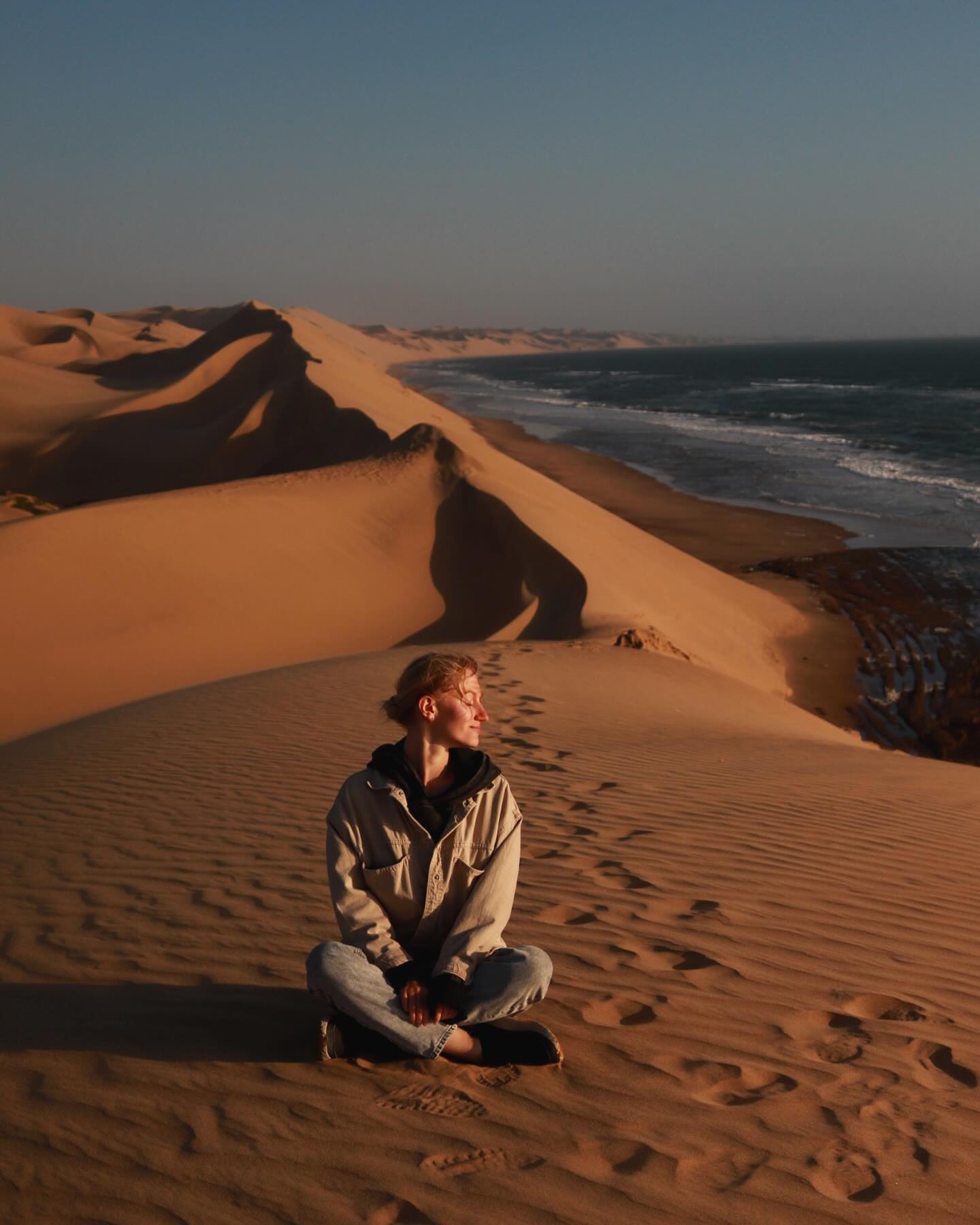
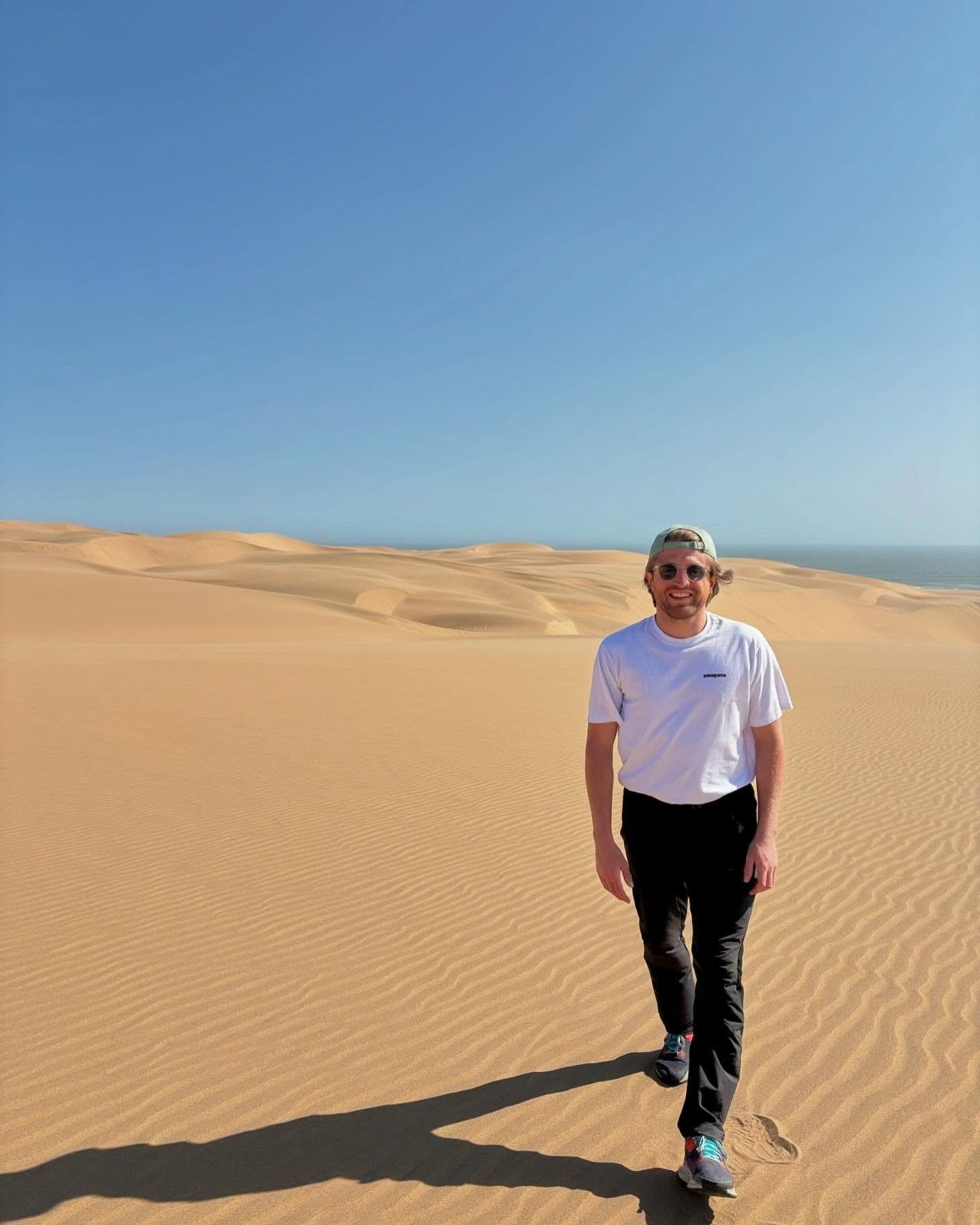
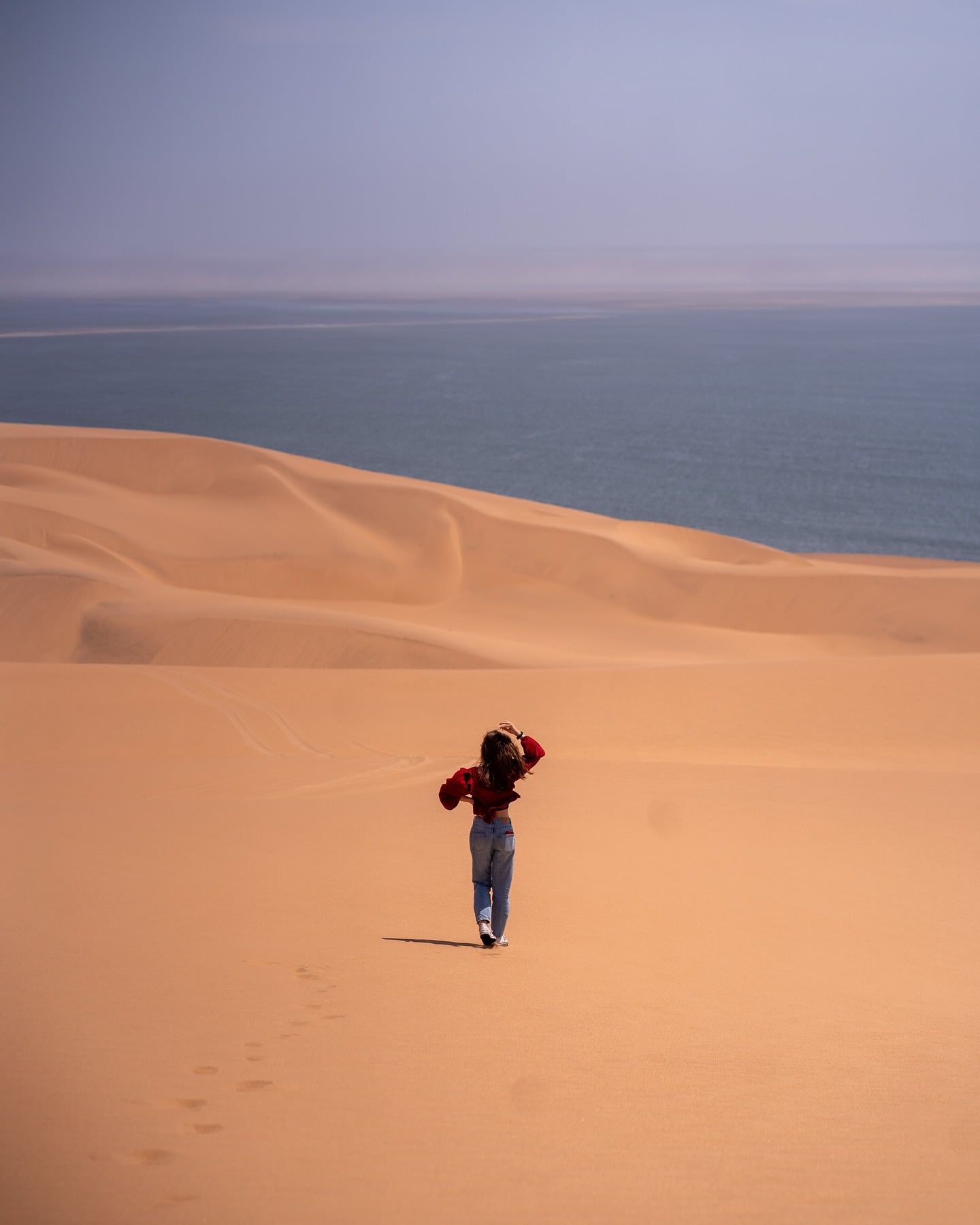
Late afternoon excursions align perfectly with the golden hour, casting long, dramatic shadows across the sweeping sand textures. Photographers can climb to legendary elevated viewpoints to capture the exact line where towering yellow desert dunes plunge directly into the dark blue Atlantic waters below.
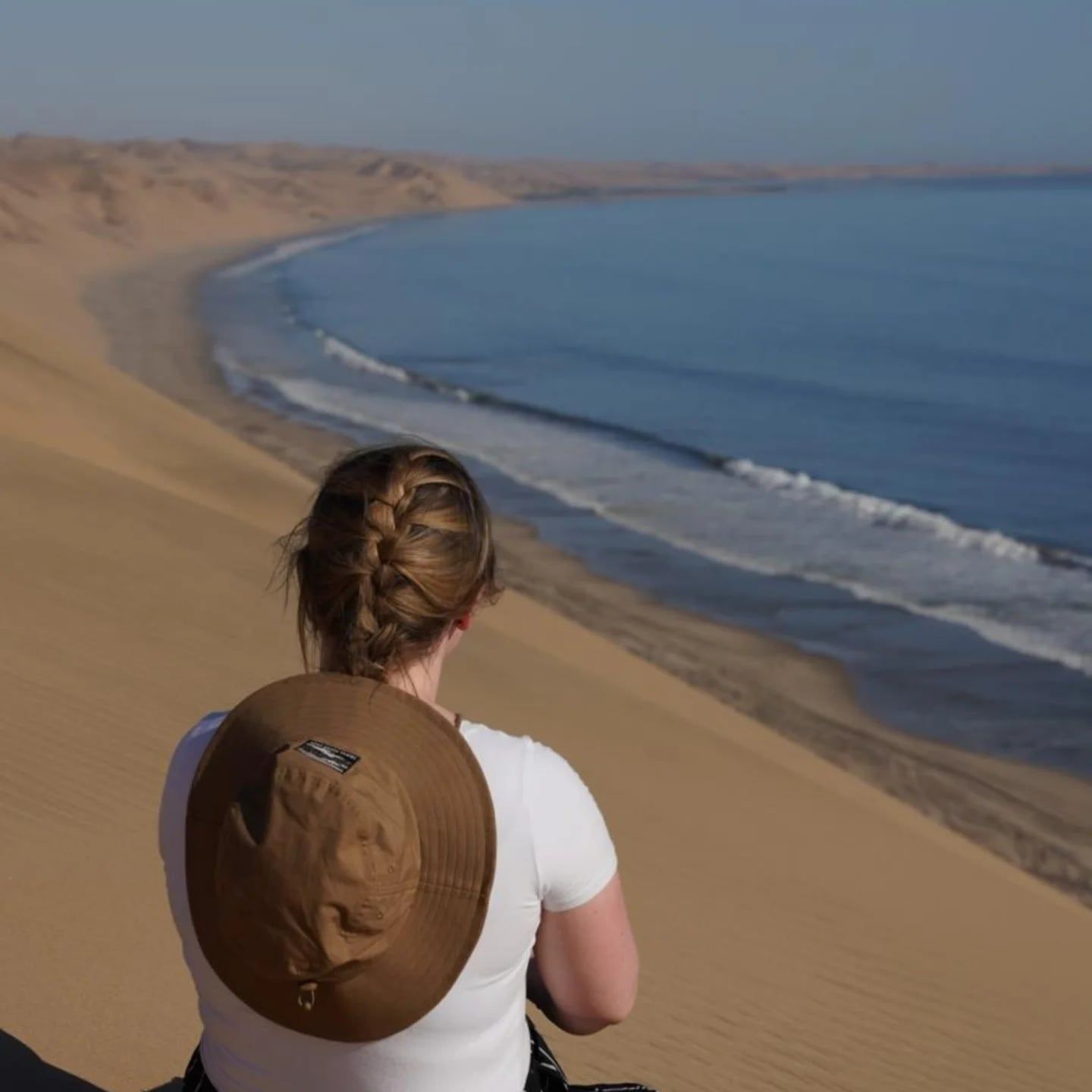
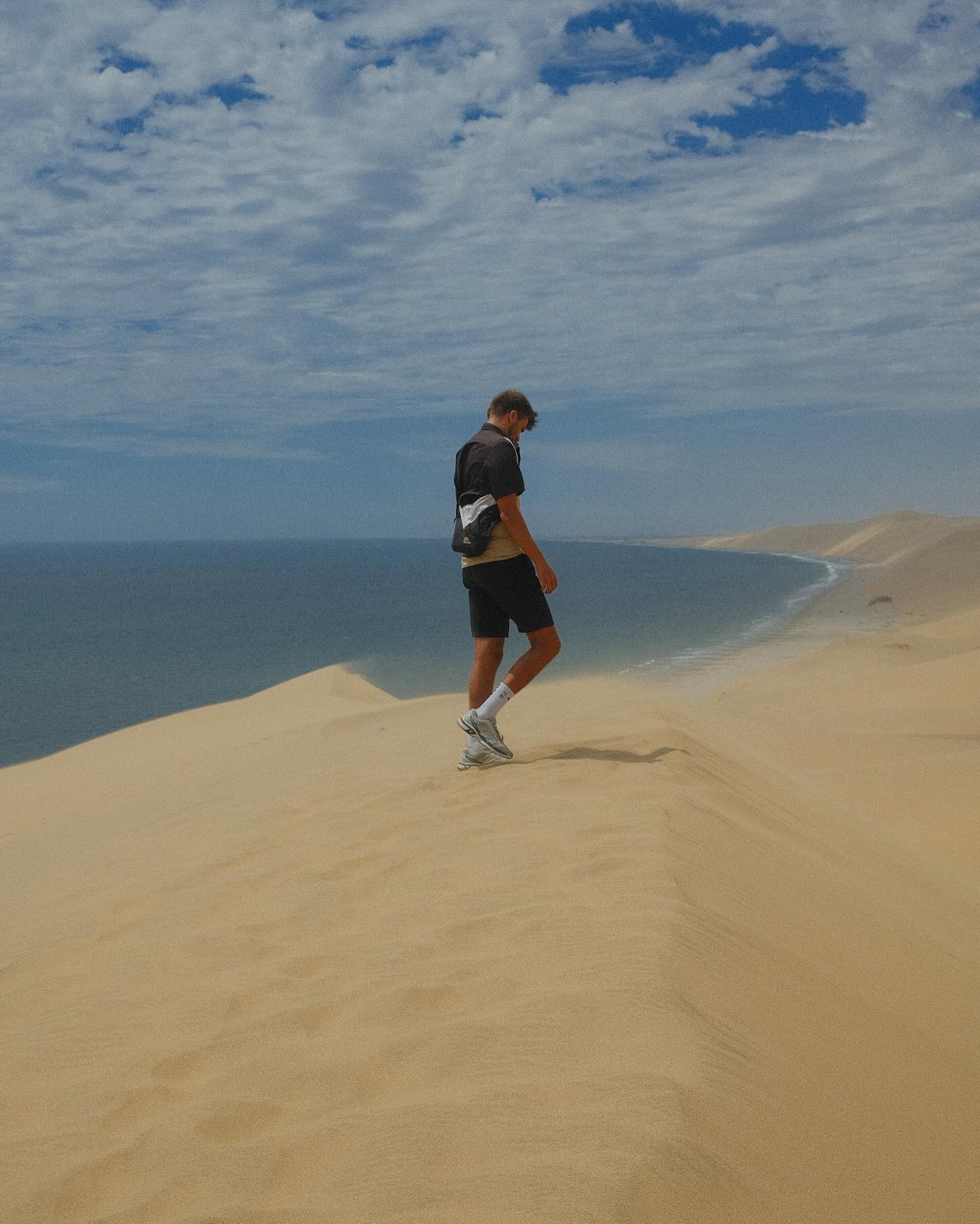
Located 80 kilometers south of Walvis Bay, this geographic anomaly features a 4.2-kilometer-long northern bay bordered entirely by towering sand. Massive golden dunes drop straight into the surf, creating a stark, dramatic visual contrast between the arid Namib Desert and the restless Atlantic sea.
Hand-picked tours with free cancellation and verified reviews
 Free Cancellation
  Free Cancellation
  Free Cancellation 4h 30min
  Free Cancellation 4h 30min
  Free Cancellation 4h
  Free Cancellation 4h 30min
  Free Cancellation 7h
  Free Cancellation 5h
 The optimal time to visit Sandwich Harbour is during the dry winter months from June to mid-September. Clear skies and cooler temperatures create ideal conditions for a typical 4 to 8 hour excursion of wildlife viewing and desert photography.
Early September retains the clear skies of winter, but October begins the less ideal wet season. Weather conditions progressively become less favorable for spotting wildlife and capturing desert photography.
These wet summer months offer warmer temperatures and less coastal wind. However, overall weather conditions are far less favorable for photography and wildlife spotting compared to the dry season.
March concludes the less ideal wet summer period. Throughout April and May, weather conditions steadily improve, transitioning back toward the cooler temperatures and clear skies required for optimal exploration.
The dry winter season is the premier time for visits. Travelers experience cooler temperatures, minimal rainfall, and clear skies perfectly suited for outdoor exploration and stunning desert photography.
Access to Sandwich Harbour relies on guided tour schedules and tidal conditions rather than fixed operating hours. Morning excursions typically depart at 8:30 AM and return between 3:30 PM and 4:00 PM. Afternoon and sunset tour departure times fluctuate seasonally to align with the low tide schedules necessary for safe beach access.
| Category | Price |
|---|---|
| Guided 4x4 tour (per person) | $175 - $220 USD |
| Self-drive guided tour using own 4x4 (for two people) | $150.45 USD |
| Self-drive guided tour with rented 4x4 (group of up to two people) | $250.75 USD |
A permit is required to enter the Namib-Naukluft National Park. Only licensed guides and vehicles are permitted in the Sandwich Harbour area to ensure safe navigation through the deep sand and shifting ocean tides.
For complete schedules and ticket prices, visit our Hours & Fees page.
Reaching Sandwich Harbour requires traveling to Walvis Bay, followed by an 80-kilometer off-road transit south into the Namib-Naukluft National Park. Because the final stretch involves treacherous dunes and shifting tides, visitors must use a licensed guide rather than driving independently.
📍 Namib-Naukluft National Park, 80 km south of Walvis Bay
Daily shuttle services, such as Carlos Shuttle or Welwitschia Shuttle, run from Windhoek city center to Walvis Bay. This covers the initial 400-kilometer paved route. Upon reaching the coast, visitors transfer to a licensed 4x4 tour. Professional guides navigate the final 80 kilometers of shifting sands and tide-dependent beach routes, ensuring safe passage into the national park.
Travelers can rent a vehicle in Windhoek and drive directly to Swakopmund or Walvis Bay. After completing this 400-kilometer drive, you must leave your rental car and join a standard guided 4x4 tour. Independent driving to the harbour is highly discouraged. Licensed drivers handle the steep 30-to-40-degree sand ridges and monitor the daily tide schedules to prevent vehicles from getting trapped.
Visitors with off-road experience can join a guided self-drive convoy from Walvis Bay. You can use your own 4x4 vehicle or rent one directly from the tour company. A licensed guide leads the convoy through the deep sand and coastal passages. Drivers must strictly follow the guide's radio instructions regarding speed and climbing angles to safely navigate the 100-meter-high dunes.
For detailed transport options and routes, visit our Directions page.
The coastal Namib Desert experiences rapid temperature changes, often shifting through multiple seasons in a single day. Bring a light windbreaker to handle cold, misty mornings. As the afternoon warms up, you will need sunglasses, sunscreen, and a hat. Wear closed walking shoes if you plan to climb the steep dunes.
High winds constantly blow fine, abrasive sand across the dunes. This grit can easily scratch camera sensors and ruin zoom mechanisms. Keep your lens cap on until the exact moment you shoot, and store equipment in a closed bag. Never change lenses outside; always perform adjustments inside the sealed vehicle.
Navigating the 80-kilometer route from Walvis Bay requires extreme precision and knowledge of local tides. The narrow beach passage is only accessible for a few hours during low tide. High water and hidden subsurface seawater can instantly trap vehicles. Always hire a licensed guide or join a guided 4x4 convoy.
Flying drones is strictly prohibited within the boundaries of the Namib-Naukluft National Park. Tour operators will actively prevent you from launching one. Drivers risk losing their official licenses if they permit unauthorized flights. Focus on capturing the towering 100-meter dunes with standard photography equipment instead.
The striking evaporation ponds along the route from Walvis Bay are active industrial sites owned by a solar salt producer. Stepping into the water is considered illegal trespassing. You must stay on designated public roads. Photograph the vivid pink water and salt-loving microorganisms safely from the roadside boundary.
To capture professional-grade photos, schedule an afternoon excursion to align with the golden hour. The soft, warm light highlights the sand textures and lengthens shadows across the 30-to-40-degree ridges. Check seasonal departure times, as they fluctuate based on low tide schedules. Sunset tours offer the best lighting conditions.
This sandy peninsula supports a massive colony of Cape fur seals and diverse marine life. Visitors can kayak alongside the seals, spot dolphins, or stay at the Pelican Point Lodge.
These evaporation ponds get their striking pink color from salt-loving microorganisms and algae. The site is operated by sub-Saharan Africa's largest solar salt producer and provides highly photogenic roadside views.
This coastal town features historic German colonial architecture and a red-and-white decorated lighthouse. You can explore local museums, browse antique shops, and view the world's largest quartz crystal cluster at the Kristall Galerie.
Read what travelers share about their experience visiting Sandwich Harbour — from practical tips to personal highlights.
Driving to Sandwich Harbour independently is highly discouraged and restricted to licensed guides. The route requires navigating deep sand dunes and a narrow beach passage that becomes impassable during high tide. Visitors must join a guided 4x4 tour or a guided self-drive convoy from Walvis Bay, located 80 km away.
A standard guided 4x4 tour costs between $175 and $220 USD per person. If you prefer to drive your own vehicle in a guided convoy, expect to pay $150.45 USD for two people. Renting a 4x4 directly from the tour operator for a self-drive guided excursion costs $250.75 USD per group of two.
A typical visit lasts between 4 and 8 hours depending on the chosen itinerary. Half-day excursions take approximately 4 hours to complete. Full-day tours, which often include lunch and stops at nearby coastal attractions, usually start at 8:30 AM and return around 4:00 PM.
The dry winter months from June to mid-September offer the best conditions for visiting. During this period, you will encounter cooler temperatures, clear skies, and minimal rainfall. These weather patterns are ideal for outdoor photography and spotting wildlife like flamingos and Cape fur seals.
Layered clothing is essential to manage the rapid temperature shifts of the coastal desert environment. Bring a light jacket or windbreaker for cold, misty mornings, along with sunscreen, sunglasses, and a hat for the afternoon. Closed walking shoes are recommended if you plan to climb the steep sand dunes.
Flying drones is strictly prohibited within the Namib-Naukluft National Park, including the Sandwich Harbour area. Tour operators enforce this rule strictly, as drivers risk losing their official licenses if guests are caught operating unauthorized flights.
Specialized tour operators offer wheelchair-accessible options where guests can safely enjoy the scenery from inside the 4x4 vehicles. The excursion is highly manageable for elderly visitors since all walking and dune climbing activities are completely optional. The deep, loose sand makes independent wheelchair travel impossible outside the vehicle.
Travelers must first cover the 400 km distance from Windhoek to Walvis Bay by rental car or a daily shuttle service, which costs about 350 NAD ($19 USD). From Walvis Bay, you must transfer to a licensed 4x4 tour to enter the national park. The final 80 km route into Sandwich Harbour requires professional drivers to navigate the 100-meter-high dunes and tidal zones.
Browse verified tours with free cancellation and instant confirmation.
Find Tours